Brush and undergrowth
Dense thickets of privet, briars, and vines are cut and removed to expose the ground and any trees worth keeping.
Serving Huntsville, AL · (256) 921-3023
Overgrown lot in Huntsville, AL? Learn how lot and brush clearing works, what the red clay and climate mean for the job, and how to plan it.
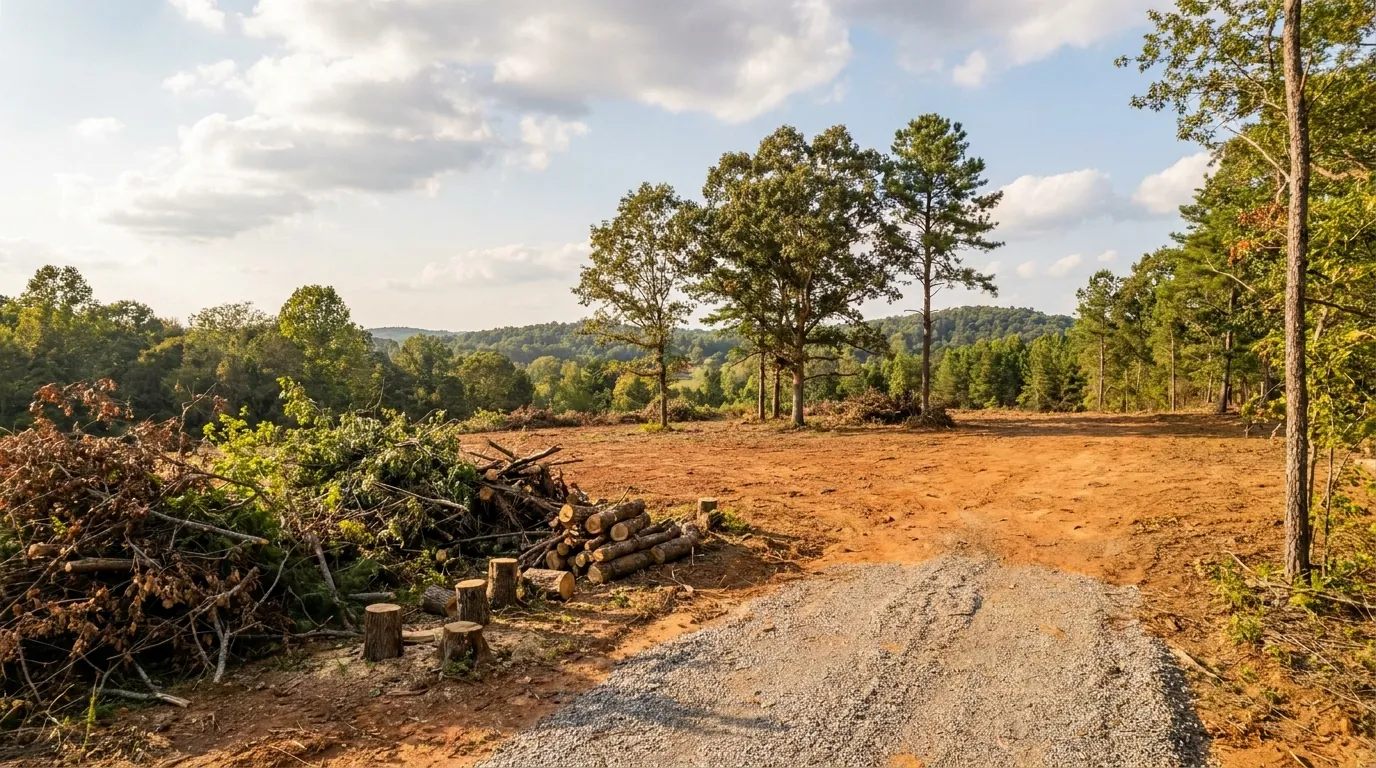
Land in the Huntsville area fills in quickly. Leave a lot alone for a few seasons and privet, sweetgum saplings, greenbrier, and volunteer hardwoods take over, backed by the vines and undergrowth that thrive in our humid summers. Whether you're prepping a building site in Madison, opening up a pasture near New Market, or just reclaiming the back half of a yard, lot and brush clearing is the first step.
Clearing is more than running a mower through weeds. It means deciding what stays and what goes, removing woody growth down to a workable grade, and handling the debris. Done well, it leaves you with land you can build on, plant, or maintain — not a churned-up mess that erodes with the next rain.
Every lot is different. Clearing work usually involves some mix of the following.
Dense thickets of privet, briars, and vines are cut and removed to expose the ground and any trees worth keeping.
Saplings and junk trees that have crowded in get cleared, while mature shade trees you want to keep are protected.
Overgrown boundaries are opened up so fencing can be installed or repaired and lines are visible again.
On wooded lots, we can thin and clear around the trees worth keeping rather than scraping everything flat.
Cut material is chipped, hauled, or stacked depending on the site and what you want left behind.
A good clearing job is planned before any equipment moves.
We identify property lines, trees to keep, wet areas, slopes, and anything buried or marked. The plan protects the keepers and the grade.
Brush and unwanted trees are cut and removed in sections, working with the slope so soil stays where it belongs.
Depending on your plans, stumps are left, ground down, or removed. Building sites usually need them gone.
Debris is handled and the surface is left in a condition that drains and can be worked, seeded, or built on.
Our red clay drains slowly and turns slick when it's wet, so clearing timing matters. Working saturated clay rips up the surface and leaves ruts that channel water and cause erosion on any slope. Dry spells are better windows for heavier clearing, and on sloped lots the exposed ground needs a plan for cover so the next heavy rain doesn't carry your topsoil toward the nearest creek.
Species matter too. Privet and Bradford pear resprout aggressively from cut stumps, so if you want them gone for good, grinding or stump removal beats simply cutting them off at ground level. When clearing uncovers a large tree that needs to come down, that's handled as tree removal, and leftover stumps can be finished with stump grinding.
If you're planning to build, fence, or open up land anywhere around Huntsville, start with a walk-through so you know what you're dealing with. We cover the city and nearby communities — see the full list on our Athens service area page and the others linked there.
Yes. Selective clearing removes brush and junk growth while protecting the mature shade trees you want to keep. We mark the keepers before any cutting starts so they aren't damaged by equipment.
It depends on the site and your preference. Material can be chipped on-site, hauled away, or stacked for you to use. We'll discuss what makes sense before work begins.
Drier periods are usually best because Huntsville's red clay rips up and ruts badly when it's saturated. On sloped lots, timing also reduces erosion risk once the ground is exposed.
Aggressive species such as privet and Bradford pear resprout from cut stumps. If you want them gone permanently, the stumps should be ground or removed rather than just cut at ground level.
Call to describe the problem and get a quote for work in Huntsville, AL.