Stump Grinding in Huntsville — Removing What's Left Behind
Stump grinding in Huntsville removes the leftover stump and surface roots so you can replant, build, or mow. Here is how it works in local clay soil.
Why the stump still matters after the tree is gone
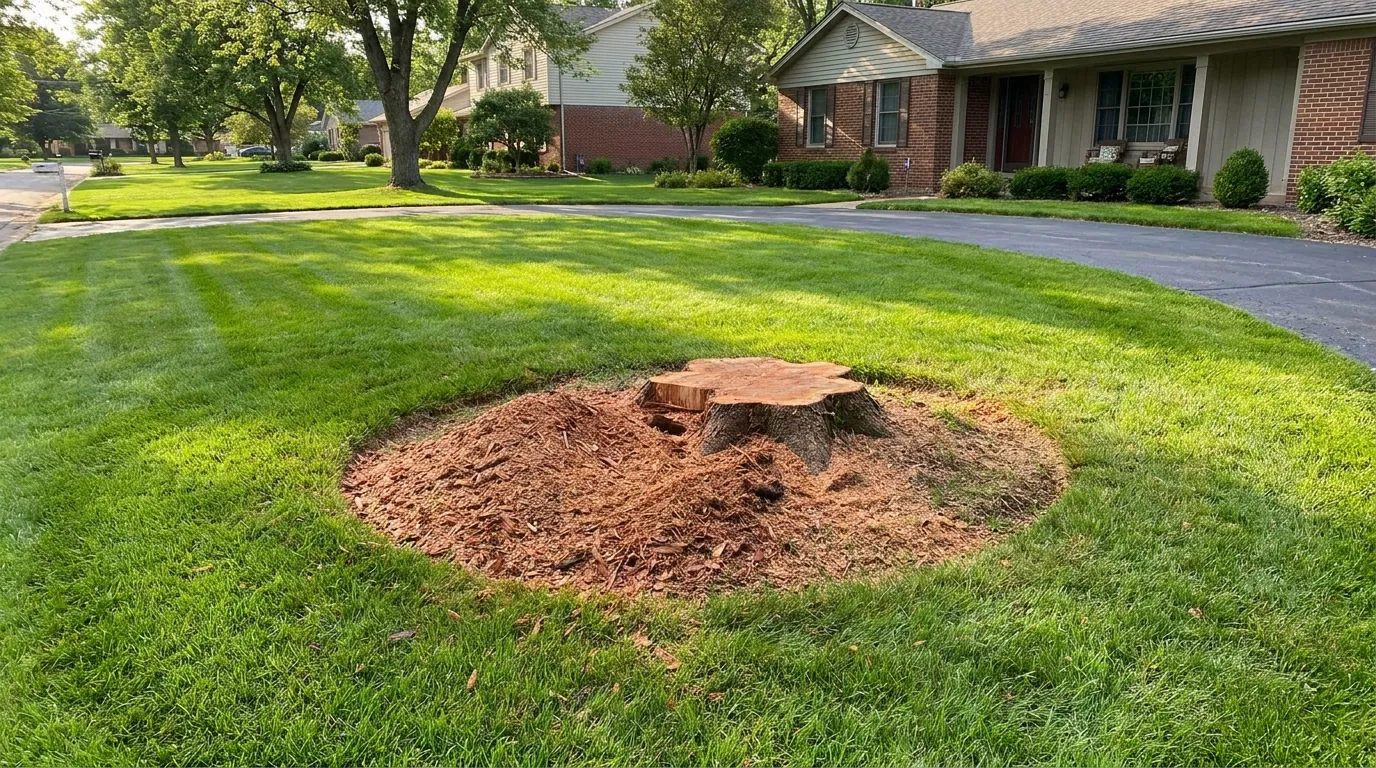
Once a tree is down, the stump is the part people forget until it becomes a nuisance. In Huntsville yards a leftover stump sprouts suckers, feeds carpenter ants and termites close to the house, snags the mower, and keeps you from replanting or laying anything over that spot. Grinding chews the stump and its upper root flare down below grade with a rotating cutting wheel, turning it into a pile of chips that fills the hole.
Grinding is the natural follow-up to tree removal, but it is also a standalone job — plenty of people call about an old stump that was cut flush years ago and left to rot slowly. If several stumps remain from clearing work, grinding usually pairs with lot and brush clearing to leave the ground workable.
How stump grinding works
The process is quick once the machine reaches the stump, but a few steps protect your yard and buried utilities.
-
Locate utilities and clear the area
Underground lines near the stump are marked and rocks, mulch, and debris are cleared away from the cutting path so the wheel is not fed anything but wood.
-
Grind below grade
The cutting wheel works the stump down several inches below the surface — deeper if you plan to replant grass or a new tree in the same spot.
-
Chase the surface roots
Clay soils push major surface roots up where they crack walkways and bump mowers. These are ground down along with the main stump when they are causing trouble.
-
Backfill and tidy
The hole is filled with the grindings, which settle over time, and excess chips are raked out or hauled off so you are left with usable ground.
What local soil and species mean for grinding
Huntsville's red clay makes grinding a little slower and a little more important. Clay holds moisture against a buried stump, so an untreated stump can stay wet and rot into a soft, sunken hollow that collects standing water in your yard. Grinding removes that problem up front. Clay also encourages the wide, shallow root systems common on water oaks and sweetgums, which means more surface roots to deal with than you might expect from the trunk alone.
Depth is a judgment call. If you just want the stump gone and the area leveled, a standard grind is enough. If you intend to plant a new tree or pour anything over the spot, it should go deeper and the big roots should be chased out. Keep in mind that grindings are wood, not soil — they are low in nutrients and will settle, so a replant spot usually needs the chips removed and topsoil brought in. Cost is driven by stump diameter, how many stumps there are, root spread, and access for the machine through gates and tight side yards.
Get a stump ground out
Send the stump's rough diameter and how the machine would reach it, and we will give you a straight answer on depth and cleanup. Serving Huntsville and nearby towns including New Market and Meridianville.
Ask about grinding at the same visit as a removal — it is usually more efficient together.
Frequently asked questions
How deep do you grind a stump?
A standard grind goes several inches below grade so the stump is out of sight and out of the mower's way. If you plan to replant or build over the spot, we go deeper and grind out the larger roots as well.
Can I plant a new tree where the old stump was?
Yes, but not directly in the grindings. Wood chips are low in nutrients and settle as they break down, so the chips should be removed and the hole backfilled with topsoil before planting.
Do you remove the roots too?
The main surface roots causing problems — the ones lifting walkways or snagging the mower in our clay soil — are ground down with the stump. The full underground root system is left to decay naturally, which is normal and harmless.
What happens to all the wood chips?
They fill the grinding hole and settle over the following weeks. Extra chips can be left for you to use as mulch or hauled away, whichever you prefer.