Clearance pruning
Raising limbs off the roof, away from the house, and back from the power service drop so they stop scraping and shading structures.
Serving Huntsville, AL · (256) 921-3023
Tree trimming and pruning for Huntsville yards — clearance cuts, deadwood removal, and storm-prep thinning suited to local species and clay soils.
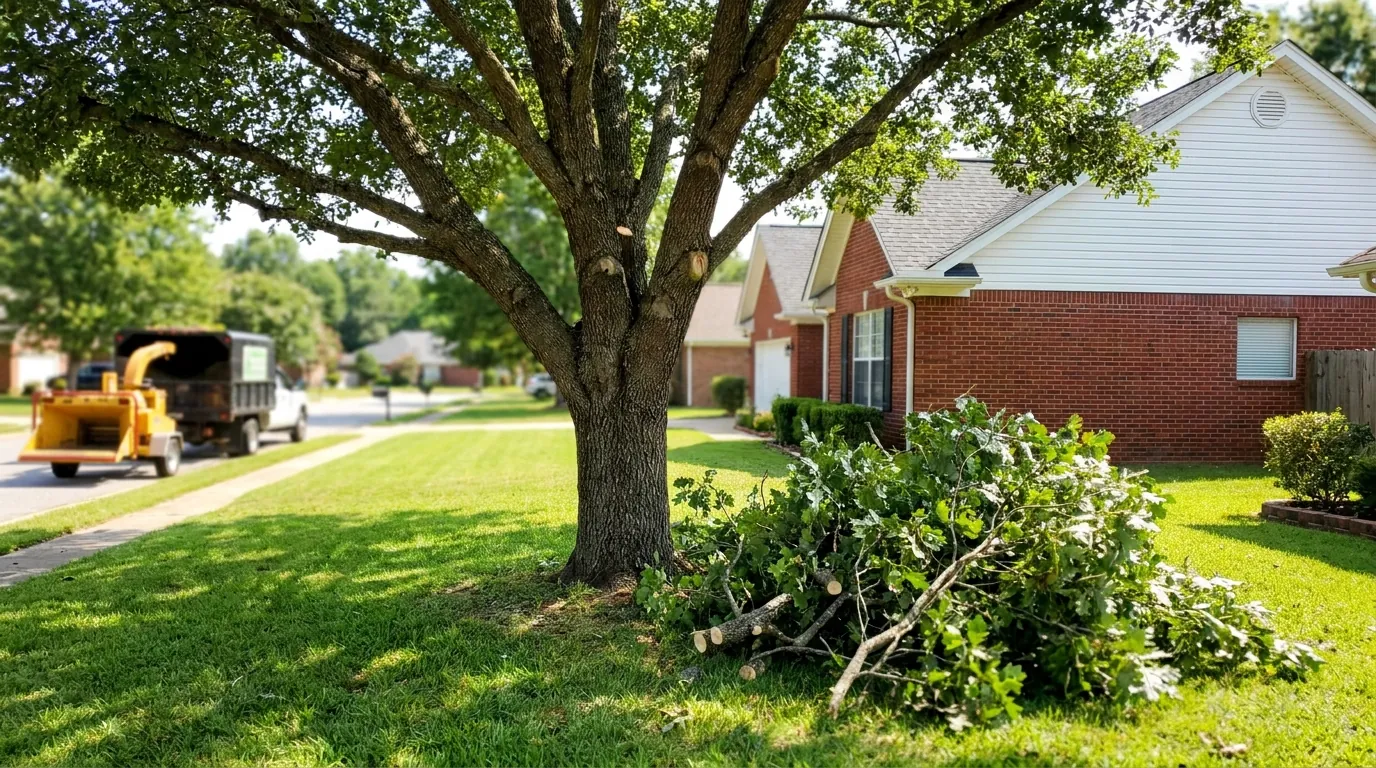
When people search for tree trimming near me or a tree trimming service near me in Huntsville, they usually want one of a few things: limbs pulled back off the roof or power drop, deadwood taken out of the canopy, a crowded tree thinned so wind passes through, or a young tree shaped so it grows with good structure. Done well, trimming a tree extends its life and cuts the chance of a limb failure in the next storm. Done badly — topping, or removing too much at once — it stresses the tree and invites decay.
Signs a tree is due for trimming include branches rubbing the siding or shingles, dead limbs hanging in the canopy, a dense top that whips hard in wind, sucker growth crowding the base, and limbs blocking a driveway or sidewalk. If the tree's problems go deeper than the branches — a split trunk, root rot, or a heavy lean — trimming may not be enough and you should weigh tree removal instead. A tree health assessment helps you tell routine pruning from a structural problem.
Different goals call for different cuts. These are the common jobs for Huntsville yards.
Raising limbs off the roof, away from the house, and back from the power service drop so they stop scraping and shading structures.
Taking out dead and dying limbs that are most likely to break free in wind. This is the single highest-value cut for storm safety.
Selectively removing interior branches so wind moves through instead of pushing the whole crown. Useful on dense water oaks and hackberries.
Shaping young and mid-size trees to build one strong leader and well-spaced limbs, so they need less corrective work later.
Huntsville's long, humid summers push fast growth, so canopies fill in quickly and trees that were clear last year may be back on the roof. That humidity also favors fungal problems, which is a reason to make clean cuts and avoid leaving large open wounds during the wettest stretches. Heavy seasonal rain softens our red clay and loads the ground, so a top-heavy, overgrown crown becomes more of a liability going into storm season — thinning and deadwood removal before spring storms is time well spent.
The best window for most structural pruning on local hardwoods is the dormant stretch in late winter, when the tree is not actively growing and cuts heal cleanly as spring arrives. Clearance and safety cuts, by contrast, can be done whenever a limb is a hazard. Pricing depends on the tree's size and height, how much is being removed, access for equipment, and whether debris is chipped on site or hauled away. If a tree turns out to be too far gone for pruning to fix, we will tell you and walk through tree removal honestly rather than selling cuts that will not help.
Point out the limbs you are worried about and we will recommend the right cuts for the tree's health and your home. Serving Huntsville, Madison, Moores Mill, and nearby towns.
We prune to keep the tree healthy — we do not top trees.
Most established shade trees in Huntsville benefit from a check every two to three years, with clearance cuts as needed when limbs reach the house or lines. Fast growers and young trees being shaped may need attention more often.
No. Topping removes too much at once, forces weak regrowth, and invites decay — the tree often ends up larger and more hazardous. Proper thinning and reduction cuts control size without that damage.
Late winter dormancy is ideal for structural pruning on most local hardwoods, since cuts heal as growth resumes. Dead, broken, or hazardous limbs can and should be removed any time of year.
Sometimes. If the trunk and major limbs are sound, removing broken wood and rebalancing the crown can keep a tree. If the trunk is split or the lean is severe, removal is usually the safer choice.