Tree Planting & Installation in Huntsville
Tree planting and installation in Huntsville. Species matched to red clay and humid summers, planted at the right depth to survive the first years.
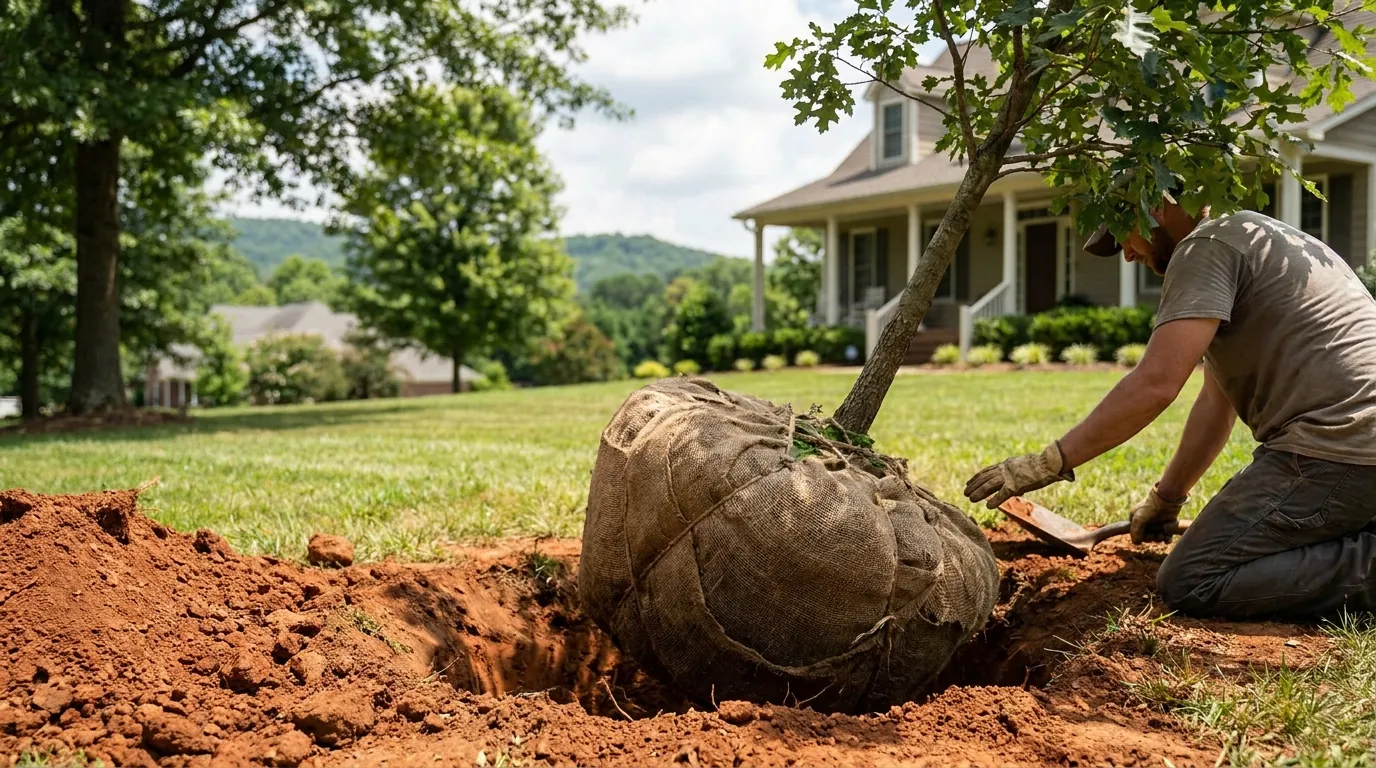
Putting a new tree back in the yard
When a tree comes down, the space it leaves rarely stays empty for long. Tree installation — planting a new tree and getting it established — is how you replace shade, screening, or curb appeal without inheriting a fresh set of problems in ten years. The single biggest factor in whether a new tree lives is how it's planted, and in the Huntsville area that means working with red clay, not against it.
Most young trees that fail don't die of neglect; they die of poor planting. Buried too deep, crammed into a narrow hole in compacted clay, or set in a spot too small for their mature size, they struggle for a few seasons and then decline. The warning signs of a bad start show up early: leaves that scorch by midsummer, a trunk with no visible flare where it meets the soil, and roots that circle instead of spreading. Getting the first steps right avoids all of it.
Installation pairs naturally with the rest of our work. If a hazardous tree still needs to come down first, see our tree removal service; if the old stump is still in the ground, our tree removal repair work prepares the site before anything new goes in.
How a planting is done
A tree that survives its first few years was almost always planted carefully. Here's the sequence we follow.
-
Site and species match
We look at sun, space, overhead lines, and drainage, then suggest species that handle Huntsville's clay and humidity — not just whatever is on sale. Placement keeps mature size in mind, away from foundations and utilities.
-
Preparing clay soil
Red clay drains poorly and packs tight. We dig a wide, shallow hole rather than a deep narrow one and break up the sides so roots can spread out instead of circling in a slick clay bowl.
-
Setting the tree at the right depth
The root flare stays at or slightly above grade. Planting too deep — a common mistake in heavy soil — is one of the surest ways to kill a tree slowly.
-
Backfill, water, and mulch
We backfill with the native soil loosened and amended as needed, water it in to settle air pockets, and mulch a wide ring — kept off the trunk — to hold moisture and moderate soil temperature.
-
Early-care guidance
We explain watering through the first summer, which is when most new trees fail, and what to watch for as the tree matures.
Choosing what to plant in the Tennessee Valley
Not every tree thrives in Huntsville's conditions, and the wrong choice creates the next removal job. Our humid summers favor species that tolerate heat and periodic drought once established, while our heavy clay rules out anything that resents wet feet through the rainy months. Species with strong wood and sound branch structure hold up better through the occasional ice event and the summer thunderstorms that snap weaker limbs.
Placement is just as important as species. A tree that will top forty feet doesn't belong under a power line or ten feet from a foundation, where roots will eventually chase the moisture around a slab. We think about mature spread, root reach, and how the tree will shade the house in summer, so it's still an asset — not a liability — decades from now.
The first two summers decide everything. New roots in clay grow slowly, and a young tree can't pull enough water from that dense soil during a dry August without help. We set expectations up front about deep, infrequent watering. Homeowners in New Market and near Redstone Arsenal plant into the same clay, and the establishment routine holds across the area.
Ready to replace a tree you lost?
Tell us about the spot and what you want from it — shade, screening, or a specimen tree — and we'll match a species and plant it to last.
Planting across Huntsville and the surrounding towns.
Frequently asked questions
What kind of tree should I plant in Huntsville?
The best choice depends on the spot — sun, space, drainage, and how much room the roots and canopy will need at maturity. We recommend species suited to red clay and humid summers, and we place them away from lines and foundations so they don't become a future hazard.
When is the best time to plant a tree here?
Fall and late winter are generally ideal, giving roots time to establish before the summer heat. Trees can be planted in other seasons with more attention to watering, but avoiding the peak of a hot, dry summer gives the tree its best start.
Why does clay soil make planting harder?
Red clay drains slowly and compacts tightly, so a narrow hole becomes a bucket that holds water and traps roots. We dig wide and loosen the sides so roots can spread, and we set the tree at the right depth so it doesn't sit in a wet pocket.
How much watering does a new tree need?
Deep, infrequent watering through the first one to two summers is what carries a young tree through establishment. Clay holds moisture but gives it up slowly, so soaking the root zone and letting it draw down works better than light daily sprinkling.