Tree Removal Repair & Site Restoration in Huntsville
Stump grinding, surface root removal, and site restoration after tree removal in Huntsville. We level and prepare red clay ground for what comes next.
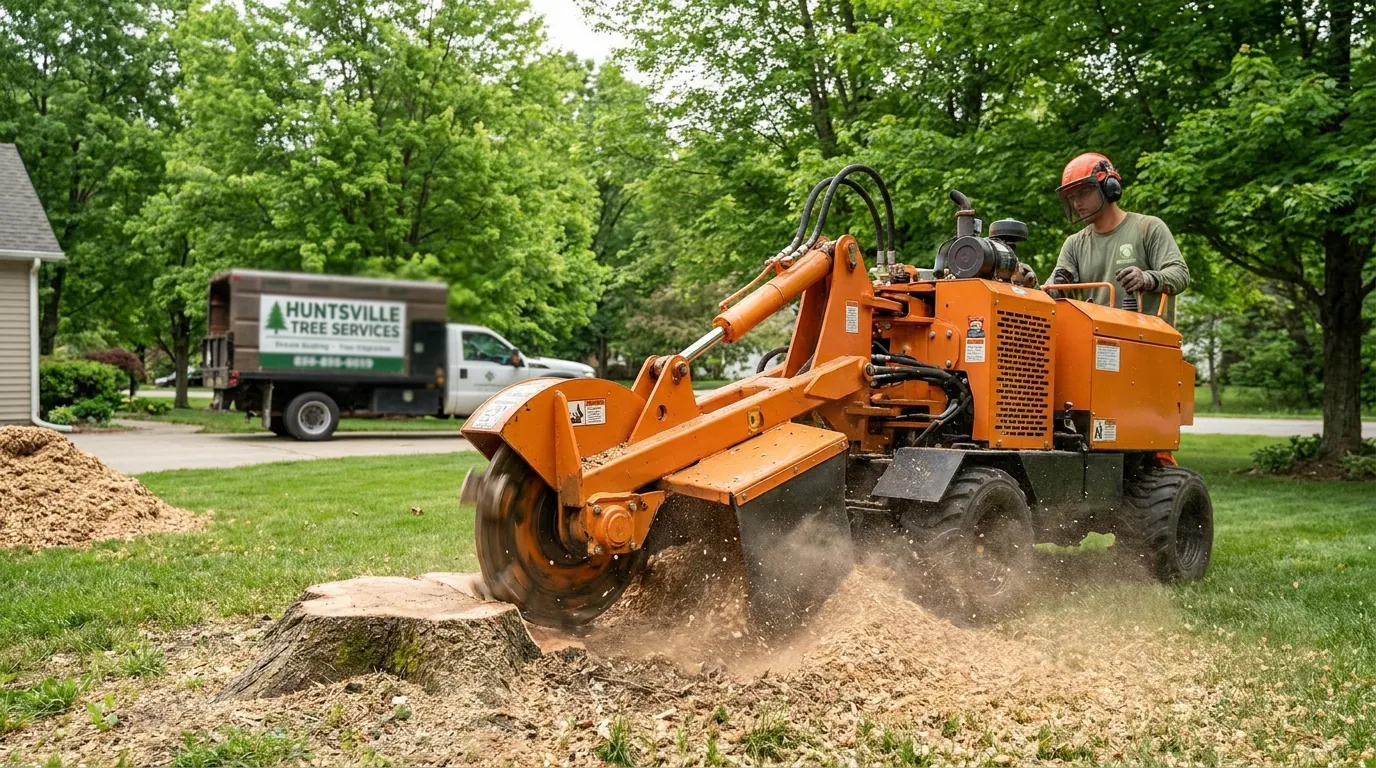
Finishing the job after the tree is gone
Taking a tree down is only half the work. What's left behind — a stump, a spread of surface roots, ruts from equipment, and a bare circle of compacted clay — is the part homeowners actually live with. Tree removal repair is the site-restoration side of the job: grinding the stump, dealing with roots, filling and leveling the ground, and leaving a spot you can seed, sod, pave, or replant.
The warning signs that a site needs this attention are easy to spot. A ground-level stump will sprout suckers and slowly rot, drawing carpenter ants and termites toward the house — a real concern in Huntsville's warm, humid conditions. Large surface roots from old oaks and maples make mowing miserable and can crack walkways. And a low, unfilled spot in red clay collects runoff and turns into standing water after every heavy rain.
Repair work follows naturally from a removal. If the tree hasn't come down yet, start with our tree removal service; if you plan to put a new tree in the same spot, our tree removal installation page explains how we prepare clay for planting.
How we restore the site
Repair work is matched to how the tree was removed and what you want the space to become.
-
Stump grinding
We grind the stump below grade so the area can be covered and planted or seeded. Grinding depth depends on what goes there next — turf needs less than a new tree or a patio.
-
Surface root removal
Large surface roots that spread from mature oaks and maples are cut back or ground down where they interfere with mowing, walkways, or grading.
-
Backfill and grading
The grind hole and any equipment ruts are filled and leveled. On clay, we pay attention to drainage so the repaired spot doesn't become the lowest point that collects runoff.
-
Grinding debris cleanup
Stump grindings are removed or spread as mulch, depending on your preference, and the surrounding turf is cleaned up.
-
Ready for what's next
Once the ground is level and stable, it's ready for seed, sod, or a replacement tree in the space.
Why clay soil makes restoration matter
Red clay is the reason repair work in the Huntsville area is more than a cosmetic afterthought. Clay compacts hard, drains slowly, and holds its shape — so a stump hole or a wheel rut left unfilled becomes a permanent low point that pools water through our rainy months. Standing water kills new grass, breeds mosquitoes, and keeps the soil around any nearby structure wet longer than it should be.
Grinding depth is another clay-specific decision. Roots decay slowly in dense, oxygen-poor clay, so a shallow grind that would be fine in sandy soil can leave a mat of wood that sinks and settles for years. When the space is going to be replanted, we grind deeper and loosen the surrounding soil, because a new tree can't push roots through a slick, compacted clay wall.
Getting the grade right protects the whole yard. We aim to leave the repaired area at or slightly proud of the surrounding grade so it settles level, not into a dish. Homeowners across Athens and Moores Mill deal with the same clay behavior, and the restoration approach is the same throughout the valley.
Left with a stump or a torn-up spot?
We can grind the stump, clear the roots, and level the ground so the space is ready to use again.
Site restoration across Huntsville and nearby towns.
Frequently asked questions
Do I really need to grind the stump?
It isn't strictly required, but a ground-level stump sprouts, rots, and attracts termites and carpenter ants toward the house — a real risk in Huntsville's humid climate. Grinding also frees the space for grass, a patio, or a new tree.
How deep do you grind a stump?
It depends on the plan for the spot. For turf we grind a few inches below grade; for a patio or a replacement tree we go deeper and address the larger roots. Clay holds decaying wood a long time, so deeper grinding pays off where the ground will be reused.
What do you do with the wood chips from grinding?
You choose. We can haul the grindings off, or spread them as mulch elsewhere in the yard. What we don't do is leave them piled in the hole, since that settles unevenly over time.
Will the repaired spot be ready to plant grass right away?
After we backfill and level, the area is ready for seed or sod. On heavy clay we may loosen and grade the surface so water drains rather than pools, which gives new grass a much better chance of taking.